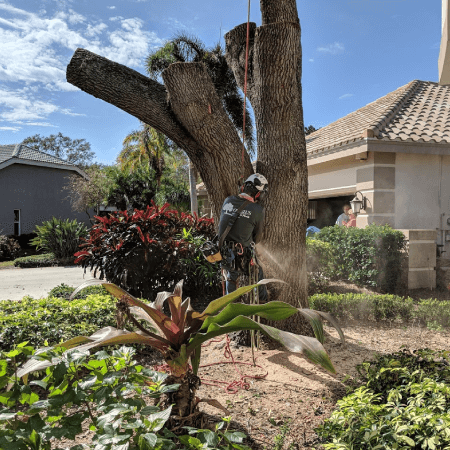
Stump Grinding in Clearwater and Palm Harbor, FL
O’Neil’s Tree Service grinds stumps to below grade throughout Clearwater, Palm Harbor, and Pinellas County. Available as a standalone service or following tree removal. We handle debris to your preference and can accommodate tight access situations. Call (727) 599-7548 to schedule.
What Stump Grinding Does
A stump grinder is a machine with a rotating cutting wheel that chews the stump down into chips. Standard depth is four to six inches below the existing soil surface, which is generally sufficient for sod and most plantings. We try to stay at the shallower end of that range when possible, because most irrigation systems in Florida are installed at four to six inches and going deeper increases the chance of hitting lines. We call 811 before every grind to locate underground utilities and reduce that risk.
When other trees are nearby and we want to protect their root systems, we shallow grind even closer to the surface. This trades some grind depth for root protection on the trees you are keeping. For new construction or a location where you plan to install a large tree, we can go deeper; let us know when you schedule so we plan for it.
The chips and grindings that come out of the process are mixed wood fiber and soil. You have three options: we rake them back into the hole as fill and haul the excess, leave all grindings on site for you to use as mulch, or haul everything off the property. Most clients choose fill plus haul.
One thing worth knowing about the debris option: when we haul the mulch off completely, we can grind more thoroughly and stand behind the result. When grindings stay in place, they can obscure spots that need another pass. If you want the cleanest outcome and are open to hauling, that is the option we recommend.
One thing stump grinding does not do: remove the entire root system. The lateral roots spread out from the stump and decompose naturally over time. For most residential situations this is not a problem. If you are planning a major construction project or a significant landscape renovation directly over the root zone, we can discuss full root excavation as an alternative, but that is a different scope and price.
Surface roots that have grown up through turf are a separate conversation. We can chase them during the same visit, but it will damage the surrounding grass and needs to be discussed before we start. Do not assume surface root grinding is included; ask specifically if that is something you want addressed.
Standalone Service or Add-On After Removal
Stump grinding is available two ways. If you had a tree removed by another company, or before you even bought the property, and the stump was left behind, we can come out and grind it as a standalone job. We do this regularly and it is straightforward to schedule.
If you are having a tree removed by our crew, adding stump grinding at the same time is the most efficient approach. The access is already cleared and coordinating one visit instead of two saves time on both ends. Our stump grinding is handled by a dedicated specialist who works separately from the removal crew, so timing is coordinated but the work is done by someone who does this exclusively.
Older stumps are generally easier and faster to grind than fresh ones. The wood is drier and less dense. If your stump has been sitting for a few years, that works in your favor on time and cost.
Access, Size, and Site Conditions
Stump grinding is straightforward on most residential properties. The main variables are stump diameter, quantity, access for the machine, and what is adjacent to the stump.
Things that affect the job:
Stump diameter: larger stumps take longer and produce more material. We measure diameter at the outermost surface roots, not just at the base of the trunk.
Quantity: grinding multiple stumps in one visit is more efficient than separate trips.
Access: our grinder needs a clear path to the stump. Tight gates, fencing, or close-in landscaping limit which equipment we can use. We carry smaller machines for confined situations.
Underground utilities: we call 811 before every job to locate major underground lines. Irrigation systems are the most common complication since they are installed shallow and often run near stumps. Hitting an irrigation line or head adds time and cost. We can help arrange repairs through a licensed contractor, but irrigation damage is generally not covered unless we discuss it in advance. We are transparent about this upfront.
Surface roots: species like ficus and some oaks have aggressive surface roots that extend well beyond the stump. If you want these addressed, say so specifically when you schedule. Do not assume it is included.
A job that shows how this works in practice:
A client in Safety Harbor had two Laurel Oak stumps plus an old papaya stump in a narrow side yard, with surface roots that had lifted three to four rows of pavers along a walkway. The client removed the pavers themselves before we arrived to give us machine access. Access was tight, about 30 inches wide through a side gate. We ground the stumps and the surface roots under the paver area, preserving the sabal palm and avocado trees nearby by keeping our grind zone tight. The client hauled the mulch themselves. The pavers went back down flat once the roots were gone.
After the Stump Is Ground
Once we finish grinding, you have a depression or a low area depending on how the grindings are handled. If you are sodding over the area, the grindings are mixed enough with native soil that sod roots through them without issue in most cases.
If you are planting a new tree in the same spot, we recommend a deeper grind and fresh topsoil brought in before you plant. Fresh wood chip grindings are high in carbon and low in nitrogen. As soil microbes break them down, they pull nitrogen out of the surrounding soil in the process. This can create a nitrogen deficit that stresses a young tree during establishment. Grinding deeper and replacing with clean soil eliminates this problem.
The area will settle slightly over the following months as the remaining root material below decomposes. For most lawns this is barely noticeable. If significant settling occurs, topdressing with a small amount of topsoil corrects it easily.

Stump Grinding
Frequently Asked Questions
How deep do you grind?
Standard depth is four to six inches below the existing soil surface. We try to stay at the shallower end of that range because most Florida irrigation systems are installed at four to six inches, and going deeper increases the chance of hitting lines. If you need deeper grinding for a construction project or a tree installation, let us know when you schedule and we will plan for it.
What do you do with the grindings?
We offer three options: rake the grindings back into the hole as fill and haul the excess, leave all grindings on site for you to use as mulch, or haul everything off the property. Most clients choose fill plus haul. When we haul the mulch completely, we can grind more thoroughly and stand behind the result. Tell us your preference when you book.
Does stump grinding remove the roots?
No. Grinding removes the stump and the major root flare immediately below grade, but the lateral root system stays in the ground and decomposes naturally over several years. For most residential properties this is not a problem. If you have specific concerns about roots affecting irrigation, a foundation, or a planned construction project, mention it when we talk and we will give you an honest assessment of what grinding can and cannot address.
Can you grind a stump in a tight space?
Usually yes. We carry smaller machines specifically for confined access situations including narrow gates, stumps close to fences, and stumps between structures. Send us several photos of the stump and the access path to it. In most cases we can tell you what equipment we would bring before you schedule.
How much does stump grinding cost?
Price depends on stump diameter, quantity, access, and debris handling preference. Diameter and access vary too much to give a meaningful number without seeing the site. Send us photos, or better yet a short video walking from the street to the stump, to (727) 599-7548 and we will respond with a written number. A site visit is also an option.
Do I need a permit to grind a stump in Pinellas County?
Stump grinding does not require a permit. The permit requirement, where it applies, is for tree removal, not for grinding the stump afterward. The one legal requirement for stump grinding is calling 811 before we breach the ground to locate underground utilities. We do this on every job.
Schedule Stump Grinding
Call (727) 599-7548 or use the contact form below. Send a photo or short video if you have one and we will respond with a written quote. We serve Clearwater, Palm Harbor, and throughout Pinellas County.