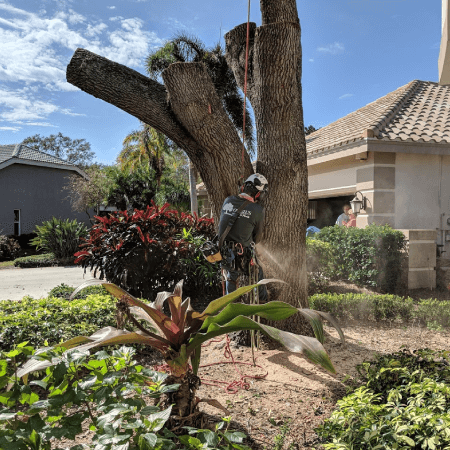
Is My Tree Dangerous?
Most trees that look concerning are not immediate hazards. Some trees that look fine have structural defects that matter. The difference requires an assessment, not a guess from the street. This page explains what to look for, what actually indicates a structural problem, and when to call an arborist versus when to wait.
What Most People Get Wrong
People overestimate risk from trees that look unusual and underestimate risk from trees that look normal.
A tree with a hollow trunk, a visible lean, or missing bark may look alarming. Some of those trees are structurally compromised. Others have been living with those conditions for decades and will outlast the house. Appearance alone is not a reliable indicator of structural failure risk.
The trees that do fail unexpectedly, the ones that fall with no apparent warning, are often the ones with internal decay, root damage, or defects at a branch union that were never visible from the outside. That is the reason professional risk assessment exists. It is not about finding reasons to remove trees. It is about distinguishing the ones that genuinely need attention from the ones that do not.
Signs That Warrant a Closer Look
These are observable conditions that justify scheduling a professional assessment. They are not automatic indicators of a dangerous tree, but they are worth investigating.
At the trunk and base
-
Large cavities in the trunk, particularly at the base or in main branch unions
-
Cracks running vertically or horizontally along the trunk
-
Mushrooms or shelf-like fungal conks growing from the trunk, root collar, or base of the tree. Ganoderma and similar species indicate internal decay
-
Soil heaving around the base of the tree; roots may be lifting
-
Bark that has been stripped or damaged significantly, whether by mechanical equipment, lightning, or other causes
-
Noticeable lean that has changed or appeared recently (a longtime lean that has not changed is a different situation)
In the canopy
-
Dead branches larger than 2 inches in diameter, especially over roofs, driveways, or high-use areas
-
Codominant stems with bark inclusion at the union. This is a common point of failure in live oaks and other large-canopy species
-
Branches or entire sections of the canopy that have leafed out significantly less than the rest of the tree
-
Cracks or splits in major branch unions
-
Hanging branches that did not fall completely during a prior storm
At the root zone
-
Recent construction, soil disturbance, or grade changes within the drip line of the tree
-
Soil compaction from vehicles or heavy equipment
-
Flooding or significant changes to drainage patterns near the tree
-
Signs of excavation that may have cut through root structure
Signs That Look Concerning But Often Are Not
These observations frequently alarm homeowners but do not necessarily indicate a structurally compromised tree.
- A permanent lean that has been stable for years. Many trees grow with a pronounced lean and are structurally sound. What matters is whether the lean is stable or progressing.
- Some deadwood in the lower canopy of a large shade tree. Dead branches in the shaded interior of a healthy tree are normal. They become a concern based on size and location, not simply existence.
- Hollow sections that appear old and sealed. Compartmentalization, the process by which trees wall off decay, can result in old hollows that are structurally insignificant. A cavity that is old, dry, and not progressing is different from one that is active.
- Moss, lichen, or small epiphytic plants on the bark. These are common in Florida’s humid climate and are not indicators of tree decline.
- A few dead branches after a dry season. Drought-induced dieback in the lower canopy is a normal stress response in many Florida species.
How to Think About It
Risk is the combination of the likelihood that something fails and the consequence if it does. A tree with a structural defect but nothing below it worth protecting presents very different risk than the same defect over a roof or a place where people spend time.
A dead branch over a vacant lot is a different situation than the same branch over a playground. Understanding risk requires assessing the tree’s condition, the target, and how often people or property occupy that target zone.
Most homeowners do not have the training to make that determination reliably. That is not a criticism. It is why professional risk assessment exists.
When to Call an Arborist Right Away
In most situations, a standard appointment is appropriate. These conditions warrant a faster response:
-
A large branch is hanging after a storm and has not fallen completely; hanging wood is one of the most unpredictable hazards in tree work
-
A tree has visibly shifted, leaned, or the root zone has heaved after a storm or significant rain event
-
A tree has been struck by lightning
-
A tree is in contact with a power line after a storm
For downed trees on power lines or active hazards, contact your utility company first. For everything else, call us.
Request An Assessment
Is My Tree Dangerous FAQ
Not necessarily, but the concern is worth checking. Neighbors often raise legitimate observations about trees near a shared fence line or property boundary. Get a professional assessment before making any decisions. If the tree is on your property and a certified arborist determines it does not present unreasonable risk, you have documented support for that conclusion.
Ganoderma species are associated with significant internal decay in hardwoods. The presence of a conk indicates advanced decay has been occurring for some time. It does not automatically mean the tree must be removed, but it changes the risk calculation significantly, particularly for trees near structures or in high-occupancy areas. An arborist can assess the extent of decay relative to the tree’s structural wood and help you understand what the finding means for your specific situation.
Yes. Internally decayed wood, root damage from construction, and defects at branch unions are not visible from outside the canopy. This is one of the strongest arguments for periodic professional assessment of significant trees on your property, not just calling when something looks wrong.
An ISA Level 2 risk assessment is a systematic evaluation of a tree’s structural condition and failure potential. It produces a written report with a risk rating and mitigation options. It is the appropriate tool when a tree has documented defects, is near a high-value target, or when a property owner, insurance carrier, or lender wants documented professional findings. For general questions about whether a tree looks concerning, a site visit and conversation with a certified arborist is often the right first step.
Not necessarily. Branch failure is common during storms and does not automatically indicate broader structural compromise. It depends on where the failure originated, whether it was in healthy wood or at a defect, and what the rest of the tree looks like. An assessment after significant storm damage is reasonable and gives you current information about the tree’s condition.