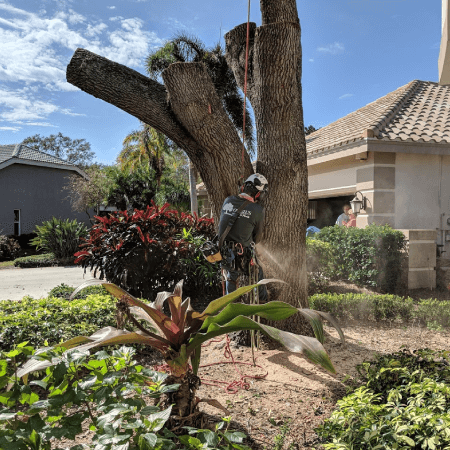
How Much Does Tree Removal Cost in Clearwater and Palm Harbor, FL?
Tree removal in Clearwater and Palm Harbor, FL typically runs $100 to $5,300 for standard climbing removals, depending on tree size and yard access. Front yard removals start at $100 for a small ornamental and reach $3,300 for a 36-inch tree. Backyard removals run 40 to 50 percent more. Crane-assisted jobs and debris are priced separately.
When tree removal is not the right answer
A lot of trees that look like they need to come down do not. Decay does not always mean removal. A leaning tree is not automatically a hazard. A tree that has dropped a few branches in a storm may still be structurally sound.
Before we quote a removal, our arborist walks the site and looks for the things that actually matter: branch unions, extent of decay, root condition, defect aspect, the targets underneath, and what the tree adds to the property. Sometimes the right answer is removal. Sometimes it is structural pruning, supplemental support like cabling, or a plant health care program. Our page on when tree removal is necessary walks through that decision framework. When removal is the right call, our tree removal service page covers how we do the work.
This matters for cost, too. A removal you did not need is a five-figure mistake on a mature live oak. An experienced, qualified arborist will tell you when the tree can stay.
What drives the price
Tree removal pricing in Pinellas County is built from a few clear factors.
- Trunk diameter (DBH). The biggest single factor. A 10-inch tree and a 30-inch tree of the same species require different amounts of effort and are therefore different jobs at different prices.
- Front yard versus back yard. Backyard tree removals typically run 40 to 50 percent more than the same tree out front. Rigging time, debris routing, gate widths, and turf protection all stack up.
- Access and obstacles. Power lines, screened pool cages, neighboring structures, narrow gates, wet turf, and irrigation systems all change the time and the safety plan.
- Crane requirement. Some trees can be climbed and rigged down by hand. Others require a crane for safety. The methods are not always obvious from the curb. Our crane-assisted cost guide covers that pricing in depth.
- Tree condition. A sound tree is climbable. A tree with significant decay, cavities, or root issues may not be safe to climb at all, which forces a different removal approach and a different price.
- Debris, stump, and permits. The base removal price covers cutting the tree down to a low stump. Hauling the wood, chipping the brush, grinding the stump, and pulling permits are separate line items.
Typical ranges for tree removal in Pinellas County
These ranges come from our published price chart, based on standard climbing removals without a crane. Crane-assisted work is priced separately and almost always required above 36 inches DBH.
| Tree size (DBH) | Front yard | Back yard |
| Under 10 inches | $100 to $300 | $148 to $450 |
| 10 to 15 inches | $400 to $800 | $592 to $1,184 |
| 16 to 24 inches | $1,150 to $1,920 | $1,702 to $2,841 |
| 25 to 36 inches | $2,200 to $3,300 | $3,256 to $4,884 |
| 37 inches and up | Can require a crane | Typically requires a crane |
These are starting numbers from a guide, not quotes. The actual price depends on the site walk because two 28-inch oaks can be very different jobs. If you only know how tall your tree is, our cost by height page translates the chart.
A few real combinations:
- A 14-inch laurel oak in a front yard with clear access runs roughly $800, plus debris.
- A 22-inch live oak in a backyard with a standard climbing removal runs roughly $2,841, plus debris.
- A 30-inch oak in a tight backyard usually needs a crane. With a 40-ton crane assist, total runs roughly $4,800 plus debris.
- Multiple trees on the same property typically receive bulk pricing.
When a crane is required
We default to climbing removals when the tree is sound and the access is workable. A crane gets used when the tree cannot be climbed safely, when large portions of wood or canopy are over structures, when there is little or no rigging path that protects the targets below, or when the property is so tight that lowering pieces by hand is slower and riskier than lifting them out.
Crane work changes the cost structure. The crane itself is a separate line item, priced by the crane capacity needed: 40-ton, 75-ton, or 120-ton. The removal portion is still priced by tree size and yard placement, but the job moves faster and the impact on the property is smaller. For the full crane-assisted breakdown, see our crane-assisted tree removal cost guide, and our crane-assisted tree removal service page covers how we plan the lift.
What is and is not included in the base price
The base removal price covers cutting the tree down. It does not automatically include, but should have separate line items for:
- Hauling the wood, chipping the brush, and removing the debris from your property is a separate line item, usually based on the volume of material.
- Stump grinding. The stump is cut low to grade by default. Grinding the stump below grade is priced separately by stump diameter and grinding depth. Our stump grinding page has details.
- Most Pinellas County municipalities require a permit to remove a protected tree. We handle the permit process for our clients, but the permit itself is its own cost.
- Plant replacement. Tree mitigation requirements vary by city. Clearwater, Largo, and Safety Harbor each have their own rules about what gets replaced and how.
Insurance and tree removal
Homeowner’s insurance often covers tree removal when the tree has already fallen from a covered peril, when repairs to the covered structure can’t be made without removing the portions on the structure, or when removal prevents further damage to the insured structure. Removals of a leaning tree, a healthy tree, unhealthy tree or a tree the homeowner simply does not want are not typically covered by insurance. Our insurance and tree removal page walks through what coverage typically looks like and what to document before you file.
When the lowest bid is the wrong call
Tree removal is one of the most dangerous jobs in the country. Industry specific reports suggest arboriculture mortality rates at roughly 110 to 150 deaths per 100,000 workers, which would likely put it at the top of the most-dangerous occupations list. That is what you are buying when you hire a real tree company: training, equipment, insurance, planning, and the discipline to do the job inside ANSI Z133 safety standards.
We have walked onto job sites to clean up after companies that cut corners. The cost of cleaning up a roof, a fence, or a sprinkler system is always higher than the cost of doing it right the first time. A good removal quote shows you the line items: removal, crane if required, debris, underground locate, stump, permits. The crew arrives with the right personal protective equipment (PPE) on, walks the site, and explains the plan before the first cut. If a bid is dramatically lower than the others, ask what is missing from it or could there be other unforeseen costs.
Request An Assessment

How Much Does Tree Removal Cost FAQ
Across roughly six years of jobs spanning small ornamentals to trees over 84 inches in diameter, our average removal cost has been around $993. That number combines a lot of small jobs with a smaller number of very large ones, so it is more of a midpoint than a budget. For a single tree, the price chart by size is a better guide.
Backyards typically run 40 to 50 percent more. Rigging takes longer. Debris has to be carried out by hand or routed through gates. Turf protection requires mats. Equipment placement is harder. The job itself is the same tree, but the work around the tree adds up.
No. Stumps are left at a low cut by default. Stump grinding is priced separately by stump diameter and grinding depth. We can do it in the same visit when access allows, or come back later.
Often yes. Clearwater has its own canopy ordinance plus a Grand Tree provision. Pinellas County’s rule covers unincorporated properties at 4-inch DBH and up for protected species. Safety Harbor, Belleair, Largo, and most Tampa Bay municipalities require permits for trees above their own size thresholds. We handle the permit process for our clients when it is required.
Sometimes. Insurance usually covers removal when the tree has already damaged the home or fallen from a covered peril, or when day-of-the-storm work prevents further covered damage. Removing a healthy tree because you do not want it is not covered. See our insurance and tree removal guide for what to document before you file.
Most residential removals are completed in a day. The actual time depends on tree size, access, debris volume, and whether a crane is involved. A small ornamental can be down and cleaned up in under an hour. A 50-inch oak in a backyard with crane work can take a full day.
For two primary reasons. One: the work is physically dangerous, which means high insurance, expensive equipment that wears out fast, and crews trained to a real standard. Two: doing a removal correctly takes planning, the right gear, and time on site to protect the rest of the property. The trucks, cranes, rigging, and skilled labor required for safe removals are not cheap, and trying to do this work cheaply is how things end up on a roof.
Yes. One of our senior arborists walks the site, asks the questions that actually affect the price, and gives you a written proposal. There is no charge for the estimate.
Either. Most Pinellas County and Tampa municipalities prohibit leaving debris for the city to collect, so we haul by default. If you want the wood cut and stacked for firewood, we can do that on request and adjust the debris line item accordingly.